









Introduction
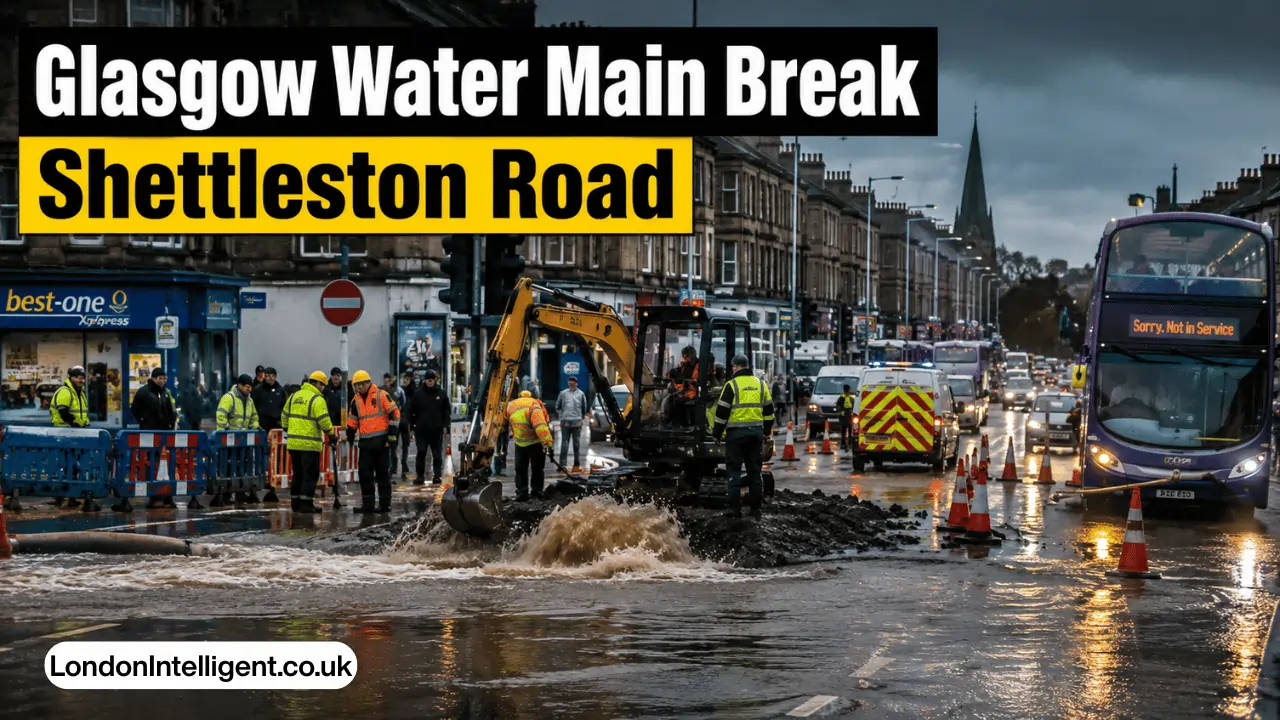
The glasgow water main break shettleston road incident did not feel like a routine utility problem. Residents faced flooded streets, blocked traffic, delayed buses, and water supply concerns within hours. What frustrated people most was not the burst pipe itself. It was the feeling that Glasgow keeps dealing with the same infrastructure failures again and again while temporary repairs are presented as long-term fixes.
Shettleston Road is one of the busiest routes in the East End. Once emergency crews arrived and barriers went up, the entire area slowed down. Drivers searched for alternative routes, local businesses lost customer flow, and nearby residents were left waiting for updates from Scottish Water crews working under pressure.
The glasgow water main break shettleston road situation became another example of how fragile aging city infrastructure has become under modern traffic and population demands.
Why the glasgow water main break shettleston road Incident Drew So Much Attention
Burst pipes happen across the UK every year, but the glasgow water main break shettleston road case gained attention because of its location and timing. Shettleston Road carries heavy daily traffic connecting residential communities with central Glasgow and surrounding districts.
When water started escaping from the damaged main, road conditions quickly became unsafe. Emergency teams moved in to isolate the problem area while traffic management crews redirected vehicles away from affected sections of the road.
Residents nearby reported:
- Reduced water pressure
- Delays in local transport
- Traffic congestion
- Flooded roadside areas
- Noise from overnight repair work
The disruption spread beyond the immediate repair site because nearby junctions and side streets became overloaded with diverted traffic.
Scottish Water Faced Pressure to Restore Services Quickly
Scottish Water responded rapidly once the glasgow water main break shettleston road issue was confirmed. Repair teams worked to identify the damaged section of pipe, stop water loss, and restore normal supply conditions as quickly as possible.
That response mattered because burst water mains can escalate fast in densely populated areas. Water pressure changes can affect surrounding properties, while flooding can weaken nearby road surfaces if repairs are delayed.
Still, quick emergency action does not remove the bigger concern. Residents across Glasgow have watched similar situations happen repeatedly over recent years. The frustration comes from the pattern itself.
People are starting to ask whether enough preventative replacement work is happening before these failures occur.
Aging Underground Pipes Are Becoming Glasgow’s Biggest Infrastructure Problem
The glasgow water main break shettleston road incident exposed a problem city officials already know exists. Large parts of Glasgow’s underground water system rely on old pipe networks installed decades ago.
Older cast iron mains become vulnerable over time because of:
- Ground movement
- Heavy vehicle vibration
- Weather pressure changes
- Corrosion inside pipes
- Constant water pressure stress
Once weak sections begin to crack, failures can happen suddenly.
Modern traffic loads place far more strain on roads than older infrastructure was originally designed to handle. Areas with busy transport movement face greater pressure beneath the surface, especially along major commuter routes like Shettleston Road.
The glasgow water main break shettleston road failure was not isolated from those wider conditions. It fits directly into a larger infrastructure challenge affecting older cities across the UK.
Businesses Along Shettleston Road Were Hit Hard
Local businesses often suffer quietly during utility failures. The glasgow water main break shettleston road disruption affected more than drivers and residents. Shops, cafes, takeaways, and small retailers along the route lost visibility and customer access during repair operations.
For independent businesses, even one difficult day matters financially.
Delivery vehicles struggled to enter affected sections. Customers avoided the area due to traffic congestion. Staff arrived late because buses and local routes were delayed.
Large chain stores can absorb temporary disruption more easily. Smaller businesses cannot.
That economic impact rarely receives the same public attention as repair updates or road closure notices, even though local traders often carry the heaviest burden during these situations.
Traffic Problems Spread Beyond the Repair Zone
The biggest issue during the glasgow water main break shettleston road repairs was how quickly traffic pressure spread into surrounding neighbourhoods.
Drivers diverted through residential streets trying to avoid congestion near the repair site. Nearby roads became overloaded within a short period of time. Bus schedules struggled to remain accurate during peak travel hours.
This happens because Shettleston Road acts as a key transport corridor in Glasgow’s East End. Once even part of that route becomes restricted, surrounding infrastructure feels the impact almost immediately.
The situation highlighted another problem inside urban planning discussions. Emergency utility repairs are often managed independently from wider transport coordination. Repairing the pipe becomes the top priority while citywide traffic flow becomes secondary.
Residents notice that imbalance quickly when journeys that normally take ten minutes suddenly stretch far longer.
Public Frustration Is Growing Across Glasgow
The glasgow water main break shettleston road incident landed at a time when patience around infrastructure issues is already wearing thin.
Residents across Glasgow have dealt with:
- Potholes
- Ongoing roadworks
- Traffic diversions
- Burst pipes
- Delayed utility repairs
- Temporary patchwork fixes
Each new incident adds to public frustration because people increasingly feel the city is reacting to problems instead of preventing them.
That frustration becomes stronger when official updates repeat the same language every time. Terms like “ongoing repairs” or “essential maintenance” start sounding empty once the same problems return repeatedly in different parts of the city.
The public wants visible long-term investment, not just emergency responses after damage already happens.
Why Burst Water Mains Keep Happening in Older Cities
The glasgow water main break shettleston road failure reflects a wider issue affecting older urban infrastructure throughout Britain.
Water systems built generations ago were designed for:
- Smaller populations
- Lighter traffic
- Lower pressure demands
- Different road conditions
Cities have changed dramatically since those systems were installed.
Roads now carry heavier vehicles all day. Construction work creates constant underground vibration. Population density has increased pressure on utility networks.
Older pipes eventually reach a stage where maintenance alone is not enough. Full replacement becomes necessary.
The challenge is financial. Large-scale infrastructure replacement projects cost enormous amounts of money and create disruption long before benefits become visible to the public. Politically, emergency repairs are often easier to manage than major long-term reconstruction plans.
That short-term approach creates repeating cycles of failure.
Residents Want Prevention Instead of Repeated Repairs
The strongest reaction following the glasgow water main break shettleston road incident came from residents who no longer believe these events are isolated accidents.
People remember earlier burst pipes in other Glasgow districts. They remember flooded streets, repair crews, blocked roads, and delayed services.
Once those incidents start forming a pattern, public trust weakens.
Residents want clearer answers about:
- Which infrastructure sections are considered high-risk
- How replacement priorities are decided
- Whether emergency repairs are temporary or permanent
- How often old mains are inspected
Without transparency, every future water main failure feels like proof that deeper problems are being ignored underground.
Emergency Repairs Carry Hidden Costs
Most people only see the immediate disruption during incidents like the glasgow water main break shettleston road event. The financial impact spreads much further than the visible repair site.
Emergency infrastructure failures create:
- Lost business income
- Delayed deliveries
- Transport disruption costs
- Additional road restoration expenses
- Emergency staffing costs
- Traffic management expenses
Repeated short-term repairs can become more expensive over time than planned infrastructure replacement programs.
That reality creates difficult questions for local authorities and utility providers. Delaying investment may reduce short-term spending pressures, but repeated failures eventually create larger economic damage across entire communities.
The glasgow water main break shettleston road Incident Will Not Be Forgotten Quickly
The reason the glasgow water main break shettleston road incident attracted so much attention is simple. Residents are tired of hearing that infrastructure problems are temporary while the same disruptions keep happening across the city.
People understand that pipes fail. What they are questioning now is whether enough is being done before those failures happen.
A city cannot keep relying on emergency responses as its main infrastructure strategy. Eventually the public starts measuring leadership not by how fast repairs happen, but by how rarely major failures occur in the first place.
That is where Glasgow’s real challenge now begins.
FAQs
1. How long did the glasgow water main break shettleston road repairs take?
Repair timelines depended on the damage severity and road conditions, but emergency crews worked continuously to restore water supply and reopen affected traffic routes as quickly as possible.
2. Did homes lose water completely during the glasgow water main break shettleston road incident?
Certain residents experienced reduced water pressure and temporary interruptions while crews isolated the damaged pipe and carried out repairs.
3. Why are burst pipes becoming more common in Glasgow?
Aging underground infrastructure, heavy traffic pressure, weather conditions, and long-term wear on older pipe systems all contribute to increasing failures across older parts of the city.
4. Were local businesses affected by the Shettleston Road disruption?
Yes. Traffic congestion, restricted road access, delayed deliveries, and reduced customer movement affected businesses operating near the repair zone.
5. Could similar incidents happen again in nearby areas?
If aging water mains remain in service without large-scale replacement work, future failures in surrounding districts remain possible.
You May Also Read: Andi Oliver Husband: Inside Garfield Hackett’s Private Life and Relationship